

As of 30 September 2026, ReSource is a B-cycle accredited Collector, Sorter and Recycler.
It’s a logo you’ll now see in our footer, and logos are easy to be cynical about. So here is what sits behind this one.
B-cycle is Australia’s national battery stewardship scheme, run by the Battery Stewardship Council. It accredits every link in the chain separately — the retailers and importers who put batteries on the market, the drop-off points that take them back, the collectors who transport them, the sorters who separate them by chemistry, and the recyclers who recover the material.
Accreditation is voluntary. There is no fee to join and, at present, no law requiring it. That’s worth knowing, because it means a recycler who isn’t accredited isn’t breaking any rules — and a recycler who is has chosen to be measured against something.
The application is not a form you fill in over coffee.
Management systems. You have to hold ISO 14001, 45001 and 9001 or equivalent, plus e-waste certification such as AS/NZS 5377, and produce recent certification and internal audit reports. We already held all four, which is the only reason this part was straightforward.
Chain of custody. Contracts with accredited partners, traceability through internal inventory, fate maps and mass balance, invoices, shipment records. Where material is exported, value chain mapping consistent with AS/NZS 5377. You have to be able to show where every tonne went, not assert it.
Downstream verification. Certificates of recycling and accreditations for your downstream vendors. It isn’t enough that you handled the batteries properly; you have to prove the next party did too.
Reporting. Quantity, chemistry, fate and cost of everything received and recovered, reported to the BSC. Processing capacity by site, monthly and annually. Battery fires, contamination and significant incidents reported to both the regulator and the scheme.
An independent audit. The BSC reviews the application and an independent auditor conducts a site audit before accreditation is granted.
And a recovery threshold. Rebate claims must demonstrate material recovery above 80%.
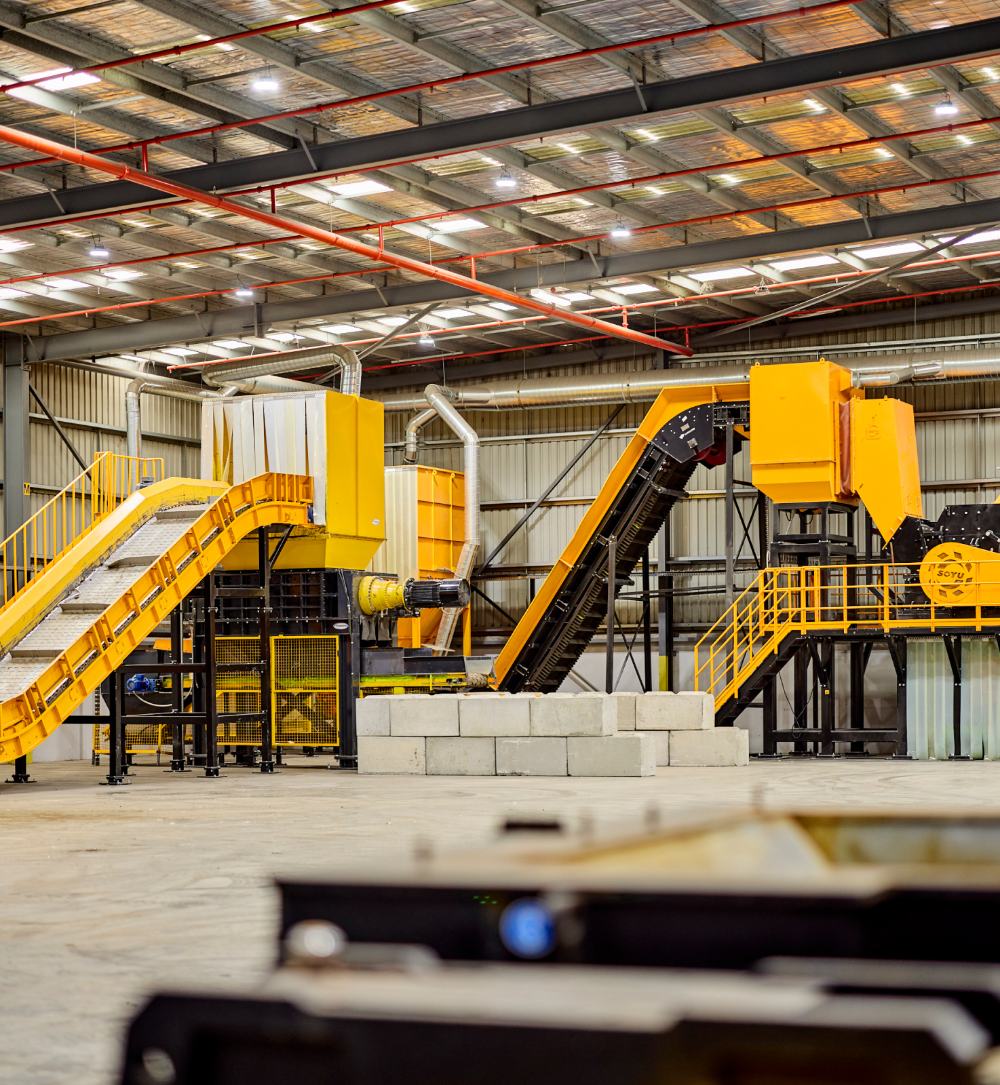
Most battery recycling in Australia runs through smelting, which recovers less than 40% of the material. Our process doesn’t smelt. We recover over 80% of the battery, turning alkaline and zinc carbon cells into a clean, dry micronutrient fertiliser, using around a twenty-fifth of the energy smelting requires.
We didn’t build it that way to satisfy B-cycle — the facility came first. But it does mean the scheme’s benchmark and our process point the same direction, and that isn’t true for every recycling pathway in this country.
If you’re a council or a business sending us batteries, three things are now different.
Your batteries move through a chain where every participant is accredited and auditable. If you need to know what happened to them, the records exist, because the scheme requires them to.
If you report against waste diversion or sustainability targets, you have third-party backing rather than your supplier’s word.
And if you operate a drop-off point, accredited collection is the route into the national network.
Victoria banned batteries from landfill in 2019. Roughly 10% of handheld batteries in Australia are recycled. The gap between those two facts isn’t a legislation problem — it’s a question of whether the recycling actually happens once the truck leaves your site.
Accreditation is one way of answering that in writing.